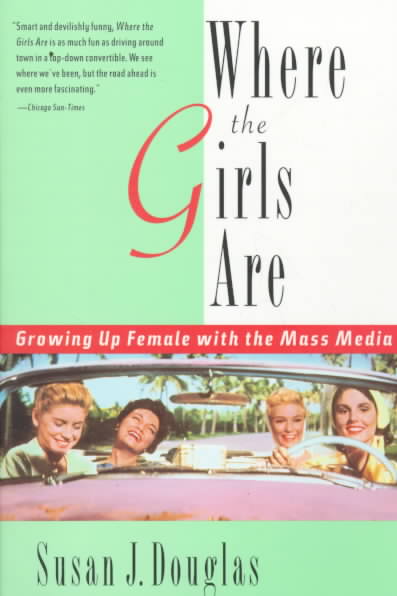
The book "Where the Girls Are: Growing Up Female with the Mass Media" is requried reading for one of my friend's history classes. Here is a book review I found for it, followed by some of my thoughts.
Book Review
Where the Girls Are: Growing Up Female with the Mass Media
Author: Susan J. Douglas
Where the Girls Are: Growing Up Female with the Mass Media
Author: Susan J. Douglas
Review by Rhonda Johnson
This wickedly funny examination of media images of women over the last 50 years, Where the Girls Are: Growing Up Female with the Mass Media explains how a generation whose role models were Gidget and Patty Duke grew up to be the feminists of the '70s. Baby-boomer women may blush in shame now, but 30 years ago Gidget taught valuable lessons about the power of being perky. Fortysomething Susan J. Douglas deconstructs a number of popular television shows, movies, magazines, and songs to show how female identities were forged from Bewitched, the movie Where the Boys Are, and the song "Will You Still Love Me Tomorrow?" Post-boomers might not have experienced the full force of the cultural schizophrenia that plagued Douglas' generation, but they will surely appreciate the trenchant discussions of TV's Charlie's Angels and Dynasty. A-
This wickedly funny examination of media images of women over the last 50 years, Where the Girls Are: Growing Up Female with the Mass Media explains how a generation whose role models were Gidget and Patty Duke grew up to be the feminists of the '70s. Baby-boomer women may blush in shame now, but 30 years ago Gidget taught valuable lessons about the power of being perky. Fortysomething Susan J. Douglas deconstructs a number of popular television shows, movies, magazines, and songs to show how female identities were forged from Bewitched, the movie Where the Boys Are, and the song "Will You Still Love Me Tomorrow?" Post-boomers might not have experienced the full force of the cultural schizophrenia that plagued Douglas' generation, but they will surely appreciate the trenchant discussions of TV's Charlie's Angels and Dynasty. A-
The book covers a variety of media forms, from magazine ads and music to television. It also gives historical information about the feminist movement and it's representations in the media. The press tried to show feminists negatively in their photographs, while 'traditional' women were always shown well-dressed and wearing make-up.
I particularly enjoyed reading about Bewitched and I Dream of Jeannie as representations of 'the new feminist woman.' Bewtiched was a show where women had all the power. Samantha and her mother, and later her daughter were all witches with magical powers. Darrin (her husband) was adament that none of them use their powers because it was not normal. Whenever the women did use their powers, Darrin and other men tended to suffer the consequences. The women were not just havoc-wreakers, however. By the end of the show, it was always Samantha coming up with the solution to all the problems. Although this was a good display of women's problem-solving power, Darrin usually ended up getting the credit at work for saving the day. The series showed men trying to contain female powers because they could be dangerous, but also that women were capable of solving problems men could not.
I Dream of Jeannie took the idea in a different direction. Jeannie caused trouble with her powers too, but Major Nelson, her 'master,' was usually the one to fix things. And it was a mostly male setting. NASA is a male-dominated workplace, and Jeannie's prescence only causes trouble. Or the presence of other women, because she is also very jealous. This show was more about how we are better off if women are left in their bottle.
The book goes on to talk about several other shows and topics. I enjoyed all of what I read and would definitely recommend it, both for its historical information and analysis of the media and its effect on women.

No comments:
Post a Comment