Thursday, December 4, 2008
I have posted articles, images, and videos related to body image issues in the female, youth population, but I have yet to tell a personal story. I remember shopping with my mother when I was just twelve-years-old. She had gained weight after going back to college, and needed to find new clothes because she had outgrown hers. Despite her weight gain, my mother is and was absolutely beautiful. I remember waiting outside the dressing room as the tried on a pant suit, but she didn't come out. Eventually I knocked on the door, and when she let me in, I noticed tears in her eyes. She sat on the floor and began to sob, saying that she thought she was going to be sick every time she looked in the mirror. I was shocked. This woman, who had always been inspirational in her strength, encouraging me to be true to myself and proud of who I was, had been reduced to tears because of her weight. The image of her sitting on the floor in the corner of this dressing room will be with me forever. She helped me to understand the NOBODY is immune to societal pressures. People often stigmatize eating disorders, self-mutilation, and body dysmprohic issues. I urge everyone to fight the urge to judge people suffering with these issues, and to take every opportunity to offer help and support.

Teen Plastic Surgery

Let's discuss why teenagers are getting plastic surgery! In 2003, over 74,000 plastic surgeries were performed on teens - a 14% increase in just three years. The number shoots to 336,000 if you include cosmetic procedures like chemical peels, microdermabrasion, and botox! What is going on? This article tells the stories of a few teens who decided to go under the knife. They describe underlying issues like low self-esteem and social isolation, which should be addressed through counseling, not surgery. What an extreme, expensive, and unhealthy band aid for a problem that is NOT only skin deep!
Super model, covergirl

According to Nada Stotland, a professor of psychiatry at Rush Medical College in Chicago, "We know seeing super-thin models can play a role in causing anorexia." Why, then, do we as a society continue to see harmful images in fashion magazines, in movies, and on television? Body-image researcher Sarah Murnen says, "The promotion of the thin, sexy ideal in our culture has created a situation where the majority of girls and women don't like their bodies." Experts link eating disorders, depression, and dysmorphia with this trend. As a society, we need to return the message of "thin as beautiful," with a counter message: "we love our bodies!" The body image-related messages we receive from the media are designed to feed an industry that makes millions of dollars a year at the expense of our self-esteems. Recognizing the issue is not enough as it has become so ingrained in our culture, the effects are inescapable. Kudos to Madrid for placing regulations on the size of their models during fashion week last year - they required that all models be in a normal weight range, which means a 5-foot-9 woman would need to weigh at least 125 pounds.
 last year - they required that all models be in a normal weight range, which means a 5-foot-9 woman would need to weigh at least 125 pounds.
Body Images: All Shapes and Sizes
Body image issues effect men, women, teens, children-everyone. The debate regarding where these issues stem from is ongoing, but I thought this video provided some interesting perspectives. It's just a short clip, but features expert opinions and interviews with regular people discussing their personal struggles and why they believe this issue is so prevalent.
Wednesday, December 3, 2008
Self mutilation
I would like to address the issue self mutilation. Through my experience as a volunteer at the Austin State Hospital, I learned about the prevalence and severity of this problem in the female, adolescent population. Self mutilation, or "cutting" is often associated with body image issues, and effects a diverse group of people. Through my work at the State Hospital, I noticed that writing, especially poetry, was an effective outlet for teenage girls struggling with this issue. The poems I read while working with these patients were beautiful, alarming, vulnerable, and brave. I would like to suggest a few websites for anyone interested in learning more about self-injury, who it effects, and how to help.
Tuesday, December 2, 2008
There have been studies done to see if the health of African American adolescents is affected by the sexual stereptypes in rap videos. You will be shocked at what was discovered!
http://www.liebertonline.com/doi/abs/10.1089/jwh.2007.0429
http://www.liebertonline.com/doi/abs/10.1089/jwh.2007.0429
Black Women Constantly Degraded in Hip-Hop
Every day, African American women are degraded and degrade themselves in music videos, on national television, for the world to see. These women are portrayed as mere sex objects, pretty face, and big butts. They are not judged by their intelligence or personality. Instead they are judged by their physical appearance and how "well" they can bounce their ass! Don't believe me, check out this video by Nelly. This video alone raised so much controversy and awareness within the Black community at large.
http://www.youtube.com/watch?v=GCjSyUXGGxQ
As a result of this video, as well as many others, BET hosted a show called "Hip Hop Vs. America." Here's a short clip.
http://www.youtube.com/watch?v=5lNPV2BO5lk
http://www.youtube.com/watch?v=GCjSyUXGGxQ
As a result of this video, as well as many others, BET hosted a show called "Hip Hop Vs. America." Here's a short clip.
http://www.youtube.com/watch?v=5lNPV2BO5lk
Monday, December 1, 2008
Dove Body Image Advertsing: Behind the beauty industry
Taryn has posted about Dove advertising. I found a couple of advertisements from Dove that I really like.
These advertisements made me think about the real meaning of “beauty”.
This video is a Dove Body image Advertising. This ad criticizes the beauty industry, and lets us know that the beauty in an advertisement is not true.
 This picture is from Dove Real Women’ advertising campaign.
Where the Girls Are
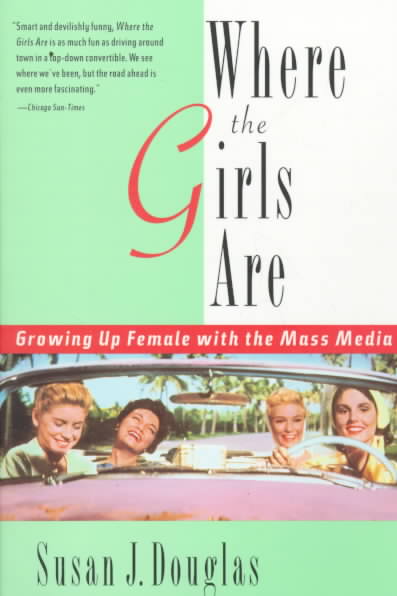
The book "Where the Girls Are: Growing Up Female with the Mass Media" is requried reading for one of my friend's history classes. Here is a book review I found for it, followed by some of my thoughts.
Book Review
Where the Girls Are: Growing Up Female with the Mass Media
Author: Susan J. Douglas
Where the Girls Are: Growing Up Female with the Mass Media
Author: Susan J. Douglas
Review by Rhonda Johnson
This wickedly funny examination of media images of women over the last 50 years, Where the Girls Are: Growing Up Female with the Mass Media explains how a generation whose role models were Gidget and Patty Duke grew up to be the feminists of the '70s. Baby-boomer women may blush in shame now, but 30 years ago Gidget taught valuable lessons about the power of being perky. Fortysomething Susan J. Douglas deconstructs a number of popular television shows, movies, magazines, and songs to show how female identities were forged from Bewitched, the movie Where the Boys Are, and the song "Will You Still Love Me Tomorrow?" Post-boomers might not have experienced the full force of the cultural schizophrenia that plagued Douglas' generation, but they will surely appreciate the trenchant discussions of TV's Charlie's Angels and Dynasty. A-
This wickedly funny examination of media images of women over the last 50 years, Where the Girls Are: Growing Up Female with the Mass Media explains how a generation whose role models were Gidget and Patty Duke grew up to be the feminists of the '70s. Baby-boomer women may blush in shame now, but 30 years ago Gidget taught valuable lessons about the power of being perky. Fortysomething Susan J. Douglas deconstructs a number of popular television shows, movies, magazines, and songs to show how female identities were forged from Bewitched, the movie Where the Boys Are, and the song "Will You Still Love Me Tomorrow?" Post-boomers might not have experienced the full force of the cultural schizophrenia that plagued Douglas' generation, but they will surely appreciate the trenchant discussions of TV's Charlie's Angels and Dynasty. A-
The book covers a variety of media forms, from magazine ads and music to television. It also gives historical information about the feminist movement and it's representations in the media. The press tried to show feminists negatively in their photographs, while 'traditional' women were always shown well-dressed and wearing make-up.
I particularly enjoyed reading about Bewitched and I Dream of Jeannie as representations of 'the new feminist woman.' Bewtiched was a show where women had all the power. Samantha and her mother, and later her daughter were all witches with magical powers. Darrin (her husband) was adament that none of them use their powers because it was not normal. Whenever the women did use their powers, Darrin and other men tended to suffer the consequences. The women were not just havoc-wreakers, however. By the end of the show, it was always Samantha coming up with the solution to all the problems. Although this was a good display of women's problem-solving power, Darrin usually ended up getting the credit at work for saving the day. The series showed men trying to contain female powers because they could be dangerous, but also that women were capable of solving problems men could not.
I Dream of Jeannie took the idea in a different direction. Jeannie caused trouble with her powers too, but Major Nelson, her 'master,' was usually the one to fix things. And it was a mostly male setting. NASA is a male-dominated workplace, and Jeannie's prescence only causes trouble. Or the presence of other women, because she is also very jealous. This show was more about how we are better off if women are left in their bottle.
The book goes on to talk about several other shows and topics. I enjoyed all of what I read and would definitely recommend it, both for its historical information and analysis of the media and its effect on women.
Subscribe to:
Comments (Atom)