Thursday, December 4, 2008
I have posted articles, images, and videos related to body image issues in the female, youth population, but I have yet to tell a personal story. I remember shopping with my mother when I was just twelve-years-old. She had gained weight after going back to college, and needed to find new clothes because she had outgrown hers. Despite her weight gain, my mother is and was absolutely beautiful. I remember waiting outside the dressing room as the tried on a pant suit, but she didn't come out. Eventually I knocked on the door, and when she let me in, I noticed tears in her eyes. She sat on the floor and began to sob, saying that she thought she was going to be sick every time she looked in the mirror. I was shocked. This woman, who had always been inspirational in her strength, encouraging me to be true to myself and proud of who I was, had been reduced to tears because of her weight. The image of her sitting on the floor in the corner of this dressing room will be with me forever. She helped me to understand the NOBODY is immune to societal pressures. People often stigmatize eating disorders, self-mutilation, and body dysmprohic issues. I urge everyone to fight the urge to judge people suffering with these issues, and to take every opportunity to offer help and support.

Teen Plastic Surgery

Let's discuss why teenagers are getting plastic surgery! In 2003, over 74,000 plastic surgeries were performed on teens - a 14% increase in just three years. The number shoots to 336,000 if you include cosmetic procedures like chemical peels, microdermabrasion, and botox! What is going on? This article tells the stories of a few teens who decided to go under the knife. They describe underlying issues like low self-esteem and social isolation, which should be addressed through counseling, not surgery. What an extreme, expensive, and unhealthy band aid for a problem that is NOT only skin deep!
Super model, covergirl

According to Nada Stotland, a professor of psychiatry at Rush Medical College in Chicago, "We know seeing super-thin models can play a role in causing anorexia." Why, then, do we as a society continue to see harmful images in fashion magazines, in movies, and on television? Body-image researcher Sarah Murnen says, "The promotion of the thin, sexy ideal in our culture has created a situation where the majority of girls and women don't like their bodies." Experts link eating disorders, depression, and dysmorphia with this trend. As a society, we need to return the message of "thin as beautiful," with a counter message: "we love our bodies!" The body image-related messages we receive from the media are designed to feed an industry that makes millions of dollars a year at the expense of our self-esteems. Recognizing the issue is not enough as it has become so ingrained in our culture, the effects are inescapable. Kudos to Madrid for placing regulations on the size of their models during fashion week last year - they required that all models be in a normal weight range, which means a 5-foot-9 woman would need to weigh at least 125 pounds.
 last year - they required that all models be in a normal weight range, which means a 5-foot-9 woman would need to weigh at least 125 pounds.
Body Images: All Shapes and Sizes
Body image issues effect men, women, teens, children-everyone. The debate regarding where these issues stem from is ongoing, but I thought this video provided some interesting perspectives. It's just a short clip, but features expert opinions and interviews with regular people discussing their personal struggles and why they believe this issue is so prevalent.
Wednesday, December 3, 2008
Self mutilation
I would like to address the issue self mutilation. Through my experience as a volunteer at the Austin State Hospital, I learned about the prevalence and severity of this problem in the female, adolescent population. Self mutilation, or "cutting" is often associated with body image issues, and effects a diverse group of people. Through my work at the State Hospital, I noticed that writing, especially poetry, was an effective outlet for teenage girls struggling with this issue. The poems I read while working with these patients were beautiful, alarming, vulnerable, and brave. I would like to suggest a few websites for anyone interested in learning more about self-injury, who it effects, and how to help.
Tuesday, December 2, 2008
There have been studies done to see if the health of African American adolescents is affected by the sexual stereptypes in rap videos. You will be shocked at what was discovered!
http://www.liebertonline.com/doi/abs/10.1089/jwh.2007.0429
http://www.liebertonline.com/doi/abs/10.1089/jwh.2007.0429
Black Women Constantly Degraded in Hip-Hop
Every day, African American women are degraded and degrade themselves in music videos, on national television, for the world to see. These women are portrayed as mere sex objects, pretty face, and big butts. They are not judged by their intelligence or personality. Instead they are judged by their physical appearance and how "well" they can bounce their ass! Don't believe me, check out this video by Nelly. This video alone raised so much controversy and awareness within the Black community at large.
http://www.youtube.com/watch?v=GCjSyUXGGxQ
As a result of this video, as well as many others, BET hosted a show called "Hip Hop Vs. America." Here's a short clip.
http://www.youtube.com/watch?v=5lNPV2BO5lk
http://www.youtube.com/watch?v=GCjSyUXGGxQ
As a result of this video, as well as many others, BET hosted a show called "Hip Hop Vs. America." Here's a short clip.
http://www.youtube.com/watch?v=5lNPV2BO5lk
Monday, December 1, 2008
Dove Body Image Advertsing: Behind the beauty industry
Taryn has posted about Dove advertising. I found a couple of advertisements from Dove that I really like.
These advertisements made me think about the real meaning of “beauty”.
This video is a Dove Body image Advertising. This ad criticizes the beauty industry, and lets us know that the beauty in an advertisement is not true.
 This picture is from Dove Real Women’ advertising campaign.
Where the Girls Are
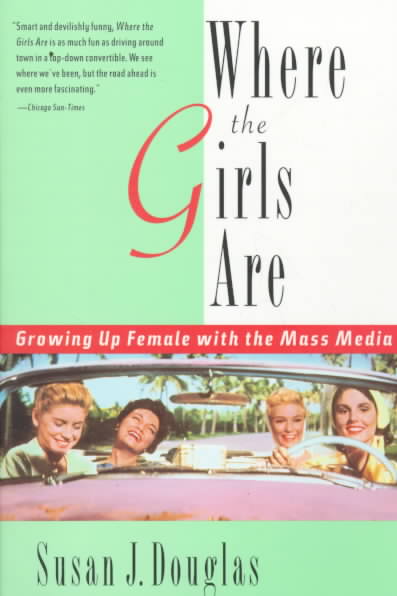
The book "Where the Girls Are: Growing Up Female with the Mass Media" is requried reading for one of my friend's history classes. Here is a book review I found for it, followed by some of my thoughts.
Book Review
Where the Girls Are: Growing Up Female with the Mass Media
Author: Susan J. Douglas
Where the Girls Are: Growing Up Female with the Mass Media
Author: Susan J. Douglas
Review by Rhonda Johnson
This wickedly funny examination of media images of women over the last 50 years, Where the Girls Are: Growing Up Female with the Mass Media explains how a generation whose role models were Gidget and Patty Duke grew up to be the feminists of the '70s. Baby-boomer women may blush in shame now, but 30 years ago Gidget taught valuable lessons about the power of being perky. Fortysomething Susan J. Douglas deconstructs a number of popular television shows, movies, magazines, and songs to show how female identities were forged from Bewitched, the movie Where the Boys Are, and the song "Will You Still Love Me Tomorrow?" Post-boomers might not have experienced the full force of the cultural schizophrenia that plagued Douglas' generation, but they will surely appreciate the trenchant discussions of TV's Charlie's Angels and Dynasty. A-
This wickedly funny examination of media images of women over the last 50 years, Where the Girls Are: Growing Up Female with the Mass Media explains how a generation whose role models were Gidget and Patty Duke grew up to be the feminists of the '70s. Baby-boomer women may blush in shame now, but 30 years ago Gidget taught valuable lessons about the power of being perky. Fortysomething Susan J. Douglas deconstructs a number of popular television shows, movies, magazines, and songs to show how female identities were forged from Bewitched, the movie Where the Boys Are, and the song "Will You Still Love Me Tomorrow?" Post-boomers might not have experienced the full force of the cultural schizophrenia that plagued Douglas' generation, but they will surely appreciate the trenchant discussions of TV's Charlie's Angels and Dynasty. A-
The book covers a variety of media forms, from magazine ads and music to television. It also gives historical information about the feminist movement and it's representations in the media. The press tried to show feminists negatively in their photographs, while 'traditional' women were always shown well-dressed and wearing make-up.
I particularly enjoyed reading about Bewitched and I Dream of Jeannie as representations of 'the new feminist woman.' Bewtiched was a show where women had all the power. Samantha and her mother, and later her daughter were all witches with magical powers. Darrin (her husband) was adament that none of them use their powers because it was not normal. Whenever the women did use their powers, Darrin and other men tended to suffer the consequences. The women were not just havoc-wreakers, however. By the end of the show, it was always Samantha coming up with the solution to all the problems. Although this was a good display of women's problem-solving power, Darrin usually ended up getting the credit at work for saving the day. The series showed men trying to contain female powers because they could be dangerous, but also that women were capable of solving problems men could not.
I Dream of Jeannie took the idea in a different direction. Jeannie caused trouble with her powers too, but Major Nelson, her 'master,' was usually the one to fix things. And it was a mostly male setting. NASA is a male-dominated workplace, and Jeannie's prescence only causes trouble. Or the presence of other women, because she is also very jealous. This show was more about how we are better off if women are left in their bottle.
The book goes on to talk about several other shows and topics. I enjoyed all of what I read and would definitely recommend it, both for its historical information and analysis of the media and its effect on women.
Sunday, November 30, 2008
Girls In Crisis: Low Self-esteem In Girls A Rising Epidemic
This is a short article about young girls' low self esteem and body image. Unhealthy body image contributes to girls' low self esteem since they are young like age 8.
Nov 19, 2008 – Girls worldwide feel that they don’t have what it takes to be beautiful, confident people. They aren’t comfortable with themselves and don’t like what they see when they look in the mirror. Girls as young as 8 years old are having issues with their looks and their body image. They are discussing with their friends the characteristics they don’t like about themselves. They want to go on diets. And it only gets worse over time. The peak age of low self-esteem is 13 years old; the transition year from tween, ages 8-12, to teen, ages 13-18. These findings come from months of research, statistic watching, talking with girls and ongoing discussions at the website GirlEvolution.com. According to GirlEvolution.com Owner Chrishawn Simpson-MacLeod, most girls are in a bad, insecure place right now. Something needs to change so that these girls know that they are unique, special, beautiful individuals that can live good lives, become who ever they want to be and have healthy, positive relationships. A 16-year old Southern girl from Arkansas said, ”I’m fat, I’m ugly and I just don’t feel good about myself.” Another 9-year old Midwestern girl from Chicago stated, “I want to be pretty just like the models. I need to go on a diet because I’ve gained a few pounds and I don’t want to get fat!” And shockingly, a 17-year old girl from the UK stated, “I have dealt with years of eating disorders, cutting and depression all coming from years of feeling like I wasn’t good enough due to some childhood traumas.” It’s an epidemic. And the problem is worldwide. “We HAVE to change our definition of beauty,” says Simpson-MacLeod. “We have to educate, empower, encourage and inspire girls when they are young so that when they become women they have the confidence they need to be confident, to be great, to be themselves and to be beautiful.”
Monday, November 24, 2008
Dysmorphia
I decided to post my reflection paper where I wrote about dysmorphic disorder. It took a lot of thought because it's a very personal subject to me, but also very important. If you don't know what dysmorphia is please read the article that is featured in my paper. It's an important disorder that not enough people know about.
Body Image
I went to the New York Times website and put the term “body image” in the search box. After a couple unrelated articles were listed, I found one titled “When Ugliness is in Patient’s Eye, Body Image Can Reflect Mental Disorder” http://query.nytimes.com/gst/fullpage.html?res=9D0CE1DF1331F931A35753C1A967958260&sec=health&spon=&pagewanted=1. Although not the most compassionate title, it caught my eye so I decided I would read it.
Body Image
I went to the New York Times website and put the term “body image” in the search box. After a couple unrelated articles were listed, I found one titled “When Ugliness is in Patient’s Eye, Body Image Can Reflect Mental Disorder” http://query.nytimes.com/gst/fullpage.html?res=9D0CE1DF1331F931A35753C1A967958260&sec=health&spon=&pagewanted=1. Although not the most compassionate title, it caught my eye so I decided I would read it.
The article was about dysmorphic disorder, and how it’s a relatively new formal diagnosis, and recognized mental disorder. It is rarely diagnosed, only when people have such severely critical images of some aspect of their body that it impedes their ability to do their daily activities. It also talked about how people’s self-perception of their body has gotten increasingly worse over the years and even mentioned how 31% of ten-year-olds at an elementary school “felt fat”. I thought that was heart-breaking. Children should not have to deal with that kind of negative thinking and pressure. The article also mentioned the media and how women compare themselves to models and “unattainable standards” so they are more likely to be unhappy with their bodies.
I had a very easy time relating to this article because I was diagnosed with dysmorphia when I was in high school. I had an eating disorder for a little while, although not an extreme case, and still have issues with food and some pretty bad body image problems. I thought it was normal for girls to feel bad about some aspect of their bodies, but mine got so bad that I wore baggy clothes all the time and a bandana to cover my hair because I was so self-conscious. I tried to play it off as “I wanted to be comfortable” and that I didn’t want to wear clothes that would be uncomfortable to sit in class in, but I knew that wasn’t true. I actually still won’t wear shorts, and get extremely uncomfortable in a bathing suit but I have a very supportive boyfriend who tries to get me to realize that I’m “beautiful”.
I think the body image problem is an example of oppression with a defined norm. The models on TV and in magazines and the guys in movies with six-pack abs and perfectly symmetrical faces are the norm in this case. Everyone else is either judged, or judges themselves in relation to this unobtainable ideal, which makes for a lot of unsatisfied people. It is a lot of pressure to try and live up to the norms and standards that are set for us by the media, and it’s quite exhausting.
Sex and the Problem of Self-Esteem
I thought this was a really interesting article. I've always been interested in how teenagers (and people in general) try to feel better about themselves through promiscuity and unhealthy relationships.
Sex and the Problem of Self-Esteem

Though it may be difficult to see, we have a serious self-esteem problem in our society. We are, in short, either taught that we don’t exist, taught to hate ourselves, or some combination of the two. Most people you see walking around on the street don’t feel worthy of love. And this seems to be a matter of self-love, or the lack thereof.
If we are lacking self-esteem—a problem so pervasive as to be invisible—we are going to have a lot of problems in relationships. This can account for much of our stuff around jealousy. For example, if we need a relationship to know that we exist, then we will naturally feel that our existence is threatened if our partner so much as smiles at someone else.
If much of our trip in relationships is designed to cover up a lack of real self-awareness, we are adding several dense layers of complication to finding out who we really are. It would seem that the real solution to our relationship stuff, our jealousy, our loneliness, and many other factors, is to figure out who we are, enter a conscious relationship with that person, and then take that into our relationships with others.
In other words, we need to get to the place where the most honest relationship we have in the world is with ourselves, and then let that overflow into our encounters with the people around us—not forgetting in what order these things happen. Unfortunately, we are taught to have relationships with ourselves that are based specifically on denying and deceiving ourselves. This is a sad state of humanity, but one that could be easily addressed—if we were somehow relieved of the fear to look within.
And a lot of other kinds of fear. When Ronald Reagan took office in 1981, during his first season in office, he hired the Heritage Foundation to lobby Congress for something called abstinence-only sex “education.” This is a program, taught in public schools and elsewhere, that indoctrinates kids to remain abstinent until heterosexual marriage. Kids are taught that birth control does not work. Masturbation and homosexuality are not mentioned. It is direct-denial sex education. You pay to have this taught in public schools.
The Imagery of Gender
I thought I would share my reflection paper with everyone. The music video I chose to analyze for gender stereotypes is titled About You Now. It is by the Sugababes. Here is the link to the video: http://www.youtube.com/watch?v=QPPgHlh1PVI
The most apparent pattern of behavior I saw in this video was the activity level for characters of each gender. The males in the video were much more active in their environment than the women. The main guy throughout the video was walking through the city, overcoming various obstacles. He climbed over traffic barriers and construction zone signs. He scaled dumpsters and dump trucks. Even one of the extras, a man throwing out the trash, was being more physically active than the women in the video. The main girl in the storyline of the video was walking through the same city, but when she came to the construction signs, she walked around them. The entire time, she was looking at her phone, trying to call the guy or waiting for him to call. Another woman on crutches was walking slowly and served only as another obstacle for the guy to get past. Even the three singers were not too active. They did not dance, so much as they moved from one stance to another along with the music. All of this imagery plays to the gender stereotype that men are active, conquerors of their environment and women are more passive, avoiding obstacles.
The lyrics of the song are basically an apology from one character to another. The couple had an argument, but one or possibly both of them have realized they said things they did not mean or did not think through. Now they are out on the town searching for each other. The way I interpreted the video after a couple of viewings, the apologetic lyrics fit both the male and the female. And both were searching for each other. However, the first time I watched it, I assumed the singers were acting as the voice for the female character in the video, simply because they were all women. If one does not analyze the lyrics, they can easily make these assumptions without giving it any more thought. The initial interpretation made me think the song was saying that the couple broke up because the girl overreacted about something, but now she was sorry. Unfortunately, it can end up sounding like a story about how girls are too emotional and responsible for any relationship troubles.
The intended message in the video is drawn from what I discovered after several viewings. The lyrics can be applied to either of the characters and many real-life people. Anybody is capable of overreacting or misconstruing a situation, male or female. And anybody is also capable of recognizing their mistake and apologizing for it or repairing the damage. The message is that we cannot “bring yesterday back around.” We must rectify our errors and then move on, instead of having too much pride to apologize. Also, it can be taken to mean that we should let the little things go. It is unfortunate that some couples fight about some of the most insignificant things as if they were the foundation of their relationship. Not only should we make amends for past arguments, but we should try to relax more. Do not worry about your boyfriend’s unhealthy eating habits or your girlfriend constantly texting or getting phone calls from her friends. Let go of things that are not important and remember your love for each other.
Other than the males being more active in the video than the females, it does not speak to any issues of power differences between men and women. Both characters seemed like relatable people. Other than my initial misinterpretation of the lyrics, there does not seem to be any unintentional messages in this video.
Let me know what you think.
The most apparent pattern of behavior I saw in this video was the activity level for characters of each gender. The males in the video were much more active in their environment than the women. The main guy throughout the video was walking through the city, overcoming various obstacles. He climbed over traffic barriers and construction zone signs. He scaled dumpsters and dump trucks. Even one of the extras, a man throwing out the trash, was being more physically active than the women in the video. The main girl in the storyline of the video was walking through the same city, but when she came to the construction signs, she walked around them. The entire time, she was looking at her phone, trying to call the guy or waiting for him to call. Another woman on crutches was walking slowly and served only as another obstacle for the guy to get past. Even the three singers were not too active. They did not dance, so much as they moved from one stance to another along with the music. All of this imagery plays to the gender stereotype that men are active, conquerors of their environment and women are more passive, avoiding obstacles.
The lyrics of the song are basically an apology from one character to another. The couple had an argument, but one or possibly both of them have realized they said things they did not mean or did not think through. Now they are out on the town searching for each other. The way I interpreted the video after a couple of viewings, the apologetic lyrics fit both the male and the female. And both were searching for each other. However, the first time I watched it, I assumed the singers were acting as the voice for the female character in the video, simply because they were all women. If one does not analyze the lyrics, they can easily make these assumptions without giving it any more thought. The initial interpretation made me think the song was saying that the couple broke up because the girl overreacted about something, but now she was sorry. Unfortunately, it can end up sounding like a story about how girls are too emotional and responsible for any relationship troubles.
The intended message in the video is drawn from what I discovered after several viewings. The lyrics can be applied to either of the characters and many real-life people. Anybody is capable of overreacting or misconstruing a situation, male or female. And anybody is also capable of recognizing their mistake and apologizing for it or repairing the damage. The message is that we cannot “bring yesterday back around.” We must rectify our errors and then move on, instead of having too much pride to apologize. Also, it can be taken to mean that we should let the little things go. It is unfortunate that some couples fight about some of the most insignificant things as if they were the foundation of their relationship. Not only should we make amends for past arguments, but we should try to relax more. Do not worry about your boyfriend’s unhealthy eating habits or your girlfriend constantly texting or getting phone calls from her friends. Let go of things that are not important and remember your love for each other.
Other than the males being more active in the video than the females, it does not speak to any issues of power differences between men and women. Both characters seemed like relatable people. Other than my initial misinterpretation of the lyrics, there does not seem to be any unintentional messages in this video.
Let me know what you think.
Tuesday, November 18, 2008
Girls' Self Image Survives Press Of Glossy Ads
This is another article about girls self image from The New York Times
(Also, i wonder if I can talk about another topic. I am interested in teenage pregnancy as well.)
Flip through any magazine for teen-age girls and the message is hard to miss: beauty equals long, shapely legs, perfectly coiffed hair and, above all, the half-starved look of someone who subsists solely on arugula and bean sprouts.
Studies have shown that, at least in a laboratory setting, exposure to such ultra-thin images encourages excessive dieting and a negative body image in young girls. But few psychologists have tested this theory outside the laboratory, or investigated whether the effects of media exposure last over time.
Now a new study, being presented this week at the American Psychological Association meeting, suggests that in the real world, most children absorb the images purveyed by advertisers and fashion editors with no ill effects. But for a subset of girls -- those who already are dissatisfied with their bodies, who have little support from family and friends, or who feel pressure from peers or parents to be thin -- exposure to the media ideal does take a toll.
Dr. Eric Stice, an assistant professor of psychology at the University of Texas at Austin, and his colleagues, Dr. Diane Spangler of Brigham Young University and Dr. W. Stewart Agras of Stanford University, studied 219 girls between the ages of 13 and 17 over a 20-month period. Half of the subjects received a 15-month subscription to Seventeen, the magazine with the largest readership among adolescent girls, and they agreed to read it for at least 30 minutes each month. The other half did not receive the subscription.
At the end of the study period, the researchers found, most of the girls were unaffected by the magazine's images of ultra-thin models. Only girls who were already vulnerable showed more dieting, body dissatisfaction, anxiety and bulimic symptoms like binging and purging.
The results, Dr. Stice said, indicate that ''providing a supportive, nurturing environment for developing youth seems to buffer them against a whole variety of mental and physical health problems, including eating disorders.''
Wednesday, November 12, 2008
Dr. Gupta's Blog
Check out this link to Dr. Gupta's blog on CNN.com where he addresses the frightening topic of body image issues in girls as young as eight. He offers advice to parents who are facing preteens who declare that they're too fat. Instead of a "No you're not!" he recommends asking them why they feel that way because there are often times underlying issues. Also, for any dads out there, Dr. Gupta warns you may be more influential on your daughter's body image than you thought. Don't dismiss warning signs or concerns raised by your wife, and don't tell your little girl she looks great. Instead, tell her she IS great. According to Dr. Gupta, parents need to avoid comments like "I feel fat," and above all - children who are at a normal weight should NOT be dieting.
Tuesday, November 11, 2008
Long-Term Consequences
 Sorry for the tech problems. I am still in the process of trying to upload a video ad for my church's Women's Day.
It was a big day where all the women got together to speak out about various issues they dealt with. The picture is one of the invitations. The questions on the dress were some of the issues discussed.
They had a female writer as a guest speaker, but a lot of the positive feedback I got about Women's Day was about the speakers from church. These were normal girls and women speaking about self-esteem and body image, issues of disability, relationship concerns and other stressful issues. I was not entirely surprised to hear that women of all ages are facing self-esteem issues in one form or another. But I was interested in how the older women all agreed that it is when girls are young that they are most vulnerable to these problems. Also, there was general agreement that how a young woman deals with these issues tends to stay with her later in life.
Feel free to respond to my comments.
Thursday, November 6, 2008
Gender Bias in Medicine
This NY Times article delves into the way doctors take women's health concerns less seriously than men's. When only the physical symptoms of a patient are given to doctors, they are likely to diagnose men and women the same. Whenever stress was added to the picture, it created a gender bias. Men were diagnosed the same, for the most part. Doctors were more likely to conclude that the women were more stressed out and so were exaggerating their symptoms. Discrimination is always bad, but this is particularly dangerous given that it's a medical setting. Women with legitimate medical issues are more likely to be written off. Doctors do not refer them to specialists or prescribe medication as often as they do for men, putting their female patient's health at even greater risk. I think more people need to be aware of the possibility that medical professionals may not take you as seriously if you are a woman. And more doctors, male and female, need to be more self-conscious about the treatment they prescribe to their patients, male or female.
By Tara Parker
Published: Oct. 13, 2008
Women’s Heart Symptoms Often Blamed on Stress
Signs of heart disease are more likely to be blamed on stress when the patient is a woman, new research shows.
In two studies, 230 family doctors and internists were shown sample cases of a 47-year-old man and a 56-year-old woman. The ages of the patients reflect an equal risk for heart disease. Half the vignettes included sentences indicating the patient had recently experienced a stressful life event or appeared anxious. The doctors read the case and offered a diagnosis and treatment recommendations.
When the case study involved standard heart symptoms like chest pain, shortness of breath and irregular heart beat, there was no difference in the doctor’s advice for the man or the woman. However, when stress was included as a symptom, gender differences emerged. The presence of stress changed the way doctors interpreted a woman’s symptoms, prompting them to suggest psychological factors rather than physical causes. But the presence of stress didn’t change the way men were assessed.
When stress was listed as a symptom, only 15 percent of the doctors diagnosed heart disease in women, compared to 56 percent for men. Only 30 percent of the doctors referred the women to a cardiologist, compared to 62 percent for men, and 13 percent suggested medication for women, compared to 47 percent for men.
The findings, presented at the Transcatheter Cardiovascular Therapeutics scientific symposium, could help explain why there is often a delay in the assessment of women with heart disease, said Dr. Alexandra J. Lansky, a cardiologist at NewYork-Presbyterian Hospital/Columbia University Medical Center.
By Tara Parker
Published: Oct. 13, 2008
Women’s Heart Symptoms Often Blamed on Stress
Signs of heart disease are more likely to be blamed on stress when the patient is a woman, new research shows.
In two studies, 230 family doctors and internists were shown sample cases of a 47-year-old man and a 56-year-old woman. The ages of the patients reflect an equal risk for heart disease. Half the vignettes included sentences indicating the patient had recently experienced a stressful life event or appeared anxious. The doctors read the case and offered a diagnosis and treatment recommendations.
When the case study involved standard heart symptoms like chest pain, shortness of breath and irregular heart beat, there was no difference in the doctor’s advice for the man or the woman. However, when stress was included as a symptom, gender differences emerged. The presence of stress changed the way doctors interpreted a woman’s symptoms, prompting them to suggest psychological factors rather than physical causes. But the presence of stress didn’t change the way men were assessed.
When stress was listed as a symptom, only 15 percent of the doctors diagnosed heart disease in women, compared to 56 percent for men. Only 30 percent of the doctors referred the women to a cardiologist, compared to 62 percent for men, and 13 percent suggested medication for women, compared to 47 percent for men.
The findings, presented at the Transcatheter Cardiovascular Therapeutics scientific symposium, could help explain why there is often a delay in the assessment of women with heart disease, said Dr. Alexandra J. Lansky, a cardiologist at NewYork-Presbyterian Hospital/Columbia University Medical Center.
Tuesday, October 21, 2008
Discussion of NY Times article
The NY Times Article Parent & Child by Lawrence Kutner provides an alarming window into the teenage psyche as it relates to body image. Eating disorders such as anorexia and bulimia have been the subject of much media attention and social concern, but Kutner's article highlights the importance of body image issues in adolescents who do not suffer from these disorders as they are defined by the mental health community. The article references a study conducted by Dr. James C. Rosen, a professor of psychology at the University of Vermont, in which 3,000 adolescents were surveyed about body image. The study found that the majority of teens trying to loose weight are females, and the majority of these young ladies are currently at a normal weight. Experts often blame this phenomenon on advertising, movies, and the media that relay images of unrealistically thin women to adolescent girls. Kutner explains the effect body image issues can have on the self esteem and social habits of teen girls, and also offers advice to parents on how to address this issue.
This issue relates to a number of "common elements of oppression," namely tokenism. Realistic expectations related to weight and physical appearance have been distorted by advertising and media entities that constantly bombard American youth with a warped definition of what is attractive and desirable. The standard of beauty has changed throughout history, and often revolves around what is most difficult to achieve. For example, Renaissance art depicts the female form at its most attractive as curvaceous. This is likely because carrying extra weight was difficult due to a shortage of food, making a voluptuous body rare and desirable. In today's fast food culture, obesity levels are on the rise and maintaining a thin frame is a challenge. What seems like a natural swing of the pendulum, however, has turned into an epidemic as the media presents an exaggerated image of thin as beautiful.
Arguably, tokenism has given rise to the defined norm. The few celebrities who have achieved this distorted standard of beauty serve as the norm to which many teenage girls compare themselves. This constant oppression has a negative physical, psychological, emotional, and social effect on their lives during an already difficult stage.
Sunday, October 19, 2008
Fat Bias Worse for Women
The article that I found was on The New York Times website, entitled “Fat Bias Worse for Women.” In this article the author, Jodi Hilton, discusses how society is less tolerant of weight gain in women than in men. According to a study at Yale University, “…weight discrimination, particularly against women, is as common as racial discrimination.” The article noted that women begin to experience weight bias after gaining much less weight than men. Not only that, but the study also revealed that women are two times as likely as men to report weight discrimination. Weight discrimination is even more prevalent than discrimination as a result of sexual orientation, nationality or ethnicity, physical disability and religious beliefs. Basically, this article shows one of the many pressures that are put on women when it comes to physical appearance.
The article is a perfect example of a defined norm, one of the Seven Elements of Oppression. A defined norm is “a standard of rightness and often righteousness wherein all others are judged in relation to it.” In this particular case, I would define the norm as being the expected weight of the people in question. This weight would be their “normal” weight or the way others expect them to look. Those that are in line with the defined norm judge those who are not. Once someone has gotten noticeably over that “normal” weight, they then are judged or not accepted. Those who are not of “normal” weight and size according to society are looked at differently and, in some cases, discriminated against. According to the article, “…weight-related work place bias…due to obesity are common.” This is because of this element of oppression, defined norm. Because some may not fit the physical description of what is expected in their line of work, they are then judged by those that do.
Weight discrimination is an issue faced by women on a daily basis. This is only one of the many pressures that women have to battle with. This issue even has an effect on our female adolescents today, not just older women. It affects their confidence and self-esteem in a negative way, and people need to make a conscious effort not to be the cause of this.
http://well.blogs.nytimes.com/2008/03/31/fat-bias-worse-for-women/
The article is a perfect example of a defined norm, one of the Seven Elements of Oppression. A defined norm is “a standard of rightness and often righteousness wherein all others are judged in relation to it.” In this particular case, I would define the norm as being the expected weight of the people in question. This weight would be their “normal” weight or the way others expect them to look. Those that are in line with the defined norm judge those who are not. Once someone has gotten noticeably over that “normal” weight, they then are judged or not accepted. Those who are not of “normal” weight and size according to society are looked at differently and, in some cases, discriminated against. According to the article, “…weight-related work place bias…due to obesity are common.” This is because of this element of oppression, defined norm. Because some may not fit the physical description of what is expected in their line of work, they are then judged by those that do.
Weight discrimination is an issue faced by women on a daily basis. This is only one of the many pressures that women have to battle with. This issue even has an effect on our female adolescents today, not just older women. It affects their confidence and self-esteem in a negative way, and people need to make a conscious effort not to be the cause of this.
http://well.blogs.nytimes.com/2008/03/31/fat-bias-worse-for-women/
Wednesday, October 15, 2008
This is an article about teenage girls' body image. From The New York Times.
BODY AND IMAGE; How to Talk to Teenage Girls About Weight? Very Carefully
By ERICA GOODE
Published: June 22, 2003
''I'M too fat.''
If there were a Hall of Adolescence, where the struggles of teenage girls were commemorated, those words might be inscribed over the door.
Nearly every human female between the ages of 11 and 18 has uttered them, as hormones transform lines into curves and flat surfaces into soft hills.
But when children grow up in a society where thinness is prized, eating disorders are common and obesity is epidemic, the self-consciousness of adolescence can also pose a challenge for parents, many of whom are already having trouble figuring out what, in the turbulent world of teenage behavior, is normal and what is a cause for worry. Is refusing dessert a sign of anorexia? Does a steady diet of pizza and Coca-Cola dictate a future of diabetes and heart disease? Should increasing chubbiness be ignored or gently commented on?
The questions, as any parent will attest, come easily. Getting answers is more difficult.
Raising the subject of weight or body image with a teenager is a delicate business, ''like backing into a difficult parallel parking space,'' as Elizabeth Hess, a writer in upstate New York and the mother of an 18-year-old girl, puts it.
Withering looks, baleful silences and slammed doors are not uncommon responses to any inquiry or suggestion, no matter how carefully phrased. And even when the conversational door opens, it is difficult to know how to take advantage of it.
''It's a real dilemma for a parent to know how much to say, what exactly to say, how concerned they should be and what to do about it,'' said Dr. Dianne Neumark-Sztainer, an associate professor in the division of epidemiology at the University of Minnesota's School of Public Health in Minneapolis. ''It's a very touchy subject.''
Experts say that some concern on the part of parents is not out of place. Only 1.5 to 3.5 percent of teenagers meet the clinical criteria for anorexia and bulimia, surveys suggest. But a much larger number show some sort of disordered eating or practice unhealthy dieting.
In a study published last year, for example, Dr. Neumark-Sztainer and her colleagues found that, among 4,746 junior high and high school students, 57 percent of the girls had fasted, gone on diets, used food substitutes like Slim-Fast or smoked more cigarettes to lose weight; and 12 percent had resorted to extreme measures like diet pills, vomiting or using laxatives or diuretics. (Boys were also not immune from the influence of a weight-conscious society: 33 percent had engaged in milder weight-loss tactics; 5 percent in severe tactics.)
Meanwhile, mothers watch their teenage daughters flip through fashion magazines and pronounce judgment on the ''fat butts'' and ''thunder thighs'' of reed-thin models. They overhear their daughters' conversations about classmates who run to the bathroom after lunch or exercise three hours a day. Or, having struggled themselves for years to meet society's perfectionist standards, they wonder if their daughters, too, will become locked in a torturous cycle of self-loathing, guilt and failed dieting.
''This is an issue in our family because it is an issue in society and in American culture,'' said Kelly Eskin, 42, a public relations consultant in Washington and the mother of a 14-year-old girl. ''I think that my generation of mothers is much more cognizant of weight gain and we're also more aware of eating disorders.''
For their part, teenage girls are quick to point out that their world encourages conformity -- and conformity too often means looking and dressing in a certain way.
''The pressure is that to get the cutest boy in school, you need to be beautiful and shop at American Eagle and have the perfect body,'' said Toni Albertorio, 16, a high school sophomore in Albuquerque. The girls at her school, she said, ''definitely want to fit in.''
Some experts think that girls are becoming obsessed with thinness at an earlier age than in the past.
''My impression is that they start worrying about their body before there is even any body to be worried about,'' said Kim Chernin, the author of ''The Obsession: Reflections on the Tyranny of Slenderness'' and a consultant in Berkeley, Calif., who works with parents and adolescents.
In fact, a recent study in the journal Pediatrics found that mothers were three times as likely to identify weight as a problem in girls than in boys.
Pediatricians and experts on eating disorders say that while there is no single strategy to ensure that teenagers will feel good about themselves and maintain a normal weight, there are some overarching principles.
Dr. Neumark-Sztainer, for example, said that how parents handled their own weight issues was as important as what they say to their children. A father who constantly diets is providing a model that his daughter may emulate, she said. In the same way, a mother who makes negative comments about her own body is setting an example.
''It's so common to say, 'Oh, I look so fat in this outfit,' but if you say that, then your kids are going to say it also,'' Dr. Neumark-Sztainer said.
Dr. Richard Kreipe, a professor of pediatrics and chief of the division of adolescent medicine at the University of Rochester, said that parents could help their children by building a regular exercise routine into family life and educating them at an early age about healthy eating.
''They should realize that we do have two extremes that people need to try to avoid,'' Dr. Kreipe said, ''that overweight is definitely a health problem, and that underweight is definitely a health problem.''
He cautioned, however, against jumping in with radical solutions like putting children on diets or intervening in other major ways.
''There doesn't need to be a dramatic response,'' Dr. Kreipe said. Instead, he recommended that teenagers make small changes that can result in benefits that last longer and are far less painful to achieve.
For example, if a child is significantly overweight, a parent might suggest having a glass of low-fat milk or bottled water with dinner rather than a soda, or substituting fruit and a cookie for rich desserts, Dr. Kreipe said.
On the other hand, if a teenage athlete is preoccupied with losing weight, a parent might mention the crucial role of protein and fat in providing energy for sports activities.
Dr. B. Timothy Walsh, a professor of psychiatry at Columbia University and the director of the Eating Disorders Research Unit at the New York State Psychiatric Institute in Manhattan, said that in talking to teenagers, it could help to treat weight issues like any other medical problem, making it clear that no personal judgment is being made. He recommended picking a calm time to talk and addressing the issue unemotionally.
''The best approach is to distinguish the person from her weight,'' Dr. Walsh said. ''You might say, 'Look, we love you, but let us help you deal with your low weight or your high weight.' ''
What is completely unacceptable, he and other experts agreed, is teasing teenagers about their appearance, bribing them to eat more or to lose weight, or heckling them about extra poundage that they feel entirely comfortable with.
''There's a lot about your body that you can't change, and parents ought to help their kids accept that,'' Dr. Walsh said.
Ms. Chernin put it slightly differently. ''The principle I follow,'' she said, ''is that a body belongs to the person who inhabits it.''
Here is another New York Times article about a book series aimed at helping young girls develop self-esteem and coping skills.
By Tara Parker
Books for Girls With a Health Message
When Addie Swartz was shopping with her 9-year-old daughter and friends, one of the girls noticed a scantily clad model at an Abercrombie & Fitch store. “Why do they have to do that?” one of the girls asked.
Lake Rescue offers inspiration to overweight girls.
Ms. Swartz describes it as an “aha” moment when the idea for a new book series came to her.
“It made me feel like the world is making them grow up so, so fast,” says Ms. Swartz. “It felt like there were so many messages out there that were bombarding her and her friends and girls her age.”
As a result, Ms. Swartz created the Beacon Street Girls book series. The stories, which revolve around five middle-school girls in Brookline, Mass., are shaped by leading experts in adolescent development, with the goal of helping girls build self-esteem and coping skills. Topics include the problems of an overweight girl and cyber bullying. This month the series will launch its latest book, “Green Algae and Bubblegum Wars,” a novel aimed at encouraging girls in science. The book is the result of a collaboration with Sally Ride, an astronaut who was the first American woman to orbit Earth.
But can expert health advice wrapped up as fiction really make a difference for the books’ young readers? A surprising new study suggests that for some girls, it can. To learn more, read my full Well column here.
And if you don’t know what your daughters are reading, check out this story from Naomi Wolf about the current crop of teen fiction.
What do you think of the current crop of teen literature? Has your child read a book from the Beacon Street Girls series? Please join the discussion and post your comments below.
By Tara Parker
Books for Girls With a Health Message
When Addie Swartz was shopping with her 9-year-old daughter and friends, one of the girls noticed a scantily clad model at an Abercrombie & Fitch store. “Why do they have to do that?” one of the girls asked.
Lake Rescue offers inspiration to overweight girls.
Ms. Swartz describes it as an “aha” moment when the idea for a new book series came to her.
“It made me feel like the world is making them grow up so, so fast,” says Ms. Swartz. “It felt like there were so many messages out there that were bombarding her and her friends and girls her age.”
As a result, Ms. Swartz created the Beacon Street Girls book series. The stories, which revolve around five middle-school girls in Brookline, Mass., are shaped by leading experts in adolescent development, with the goal of helping girls build self-esteem and coping skills. Topics include the problems of an overweight girl and cyber bullying. This month the series will launch its latest book, “Green Algae and Bubblegum Wars,” a novel aimed at encouraging girls in science. The book is the result of a collaboration with Sally Ride, an astronaut who was the first American woman to orbit Earth.
But can expert health advice wrapped up as fiction really make a difference for the books’ young readers? A surprising new study suggests that for some girls, it can. To learn more, read my full Well column here.
And if you don’t know what your daughters are reading, check out this story from Naomi Wolf about the current crop of teen fiction.
What do you think of the current crop of teen literature? Has your child read a book from the Beacon Street Girls series? Please join the discussion and post your comments below.
Friday, October 10, 2008
This article is from the New York Times. It describes dysmorphic disorder, which is something people need to know about.
October 2, 1991
When Ugliness Is Only in Patient's Eye, Body Image Can Reflect Mental Disorder
By DANIEL GOLEMAN
A WOMAN in her 30's, convinced she had excessive facial hair, was so intent on not being seen in public that she sped from place to place on a motorcycle. She would even run red lights, for fear someone would see her as she waited for the light to change.
A man in his 20's felt people stared at what he imagined were his "pointed ears" and "large nostrils." He eventually quit his job and stayed home rather than face the humiliation he was sure awaited him outside.
And a 28-year-old man who was preoccupied with his thinning hair was unconsoled by reassurances from four dermatologists that his hair loss was normal and barely noticeable. He became deeply depressed. Diagnosis Is Rare
Each of these people was suffering from what psychiatrists call body dysmorphic disorder, or imagined ugliness, a relatively new formal diagnosis. Such cases are being reported with greater and greater frequency.
Though the diagnosis is made comparatively rarely, psychologists studying body image estimate that 2 percent to 10 percent of people are so self-conscious about some aspect of their looks that it constricts their life in some way: keeping them from making love or dating and even rendering them homebound or suicidal. Many make a fruitless round of cosmetic surgeons, never satisfied.
To be sure, the large majority of people have some dissatisfaction with their bodies: 85 percent of women and 72 percent of men are unhappy with at least one aspect of their appearance, according to research by Dr. Thomas Cash, a psychologist at Old Dominion University in Norfolk, Va. But for most people such dissatisfaction does not become a consuming preoccupation calling for therapy.
Such obsessed people see Gargantua's belly or Cyrano's nose in features that go unremarked by others.
Most keep secret their firm belief that they are deformed. They may spend hours staring in mirrors at the imagined deformities and may go to great lengths to disguise them with clothing or cosmetics. But typically, "they don't tell a soul," said Dr. Katherine Phillips, a psychiatrist at Harvard Medical School. Her article on imagined ugliness was in the September issue of the American Journal of Psychiatry.
Frequently such people go into therapy for other problems, particularly depression, but often are so ashamed of their imagined disfigurements that they do not confide their preoccupations even to the therapists, said Dr. Phillips. And because they are more likely to consult cosmetic surgeons or dermatologists than psychotherapists, they typically get no psychological treatment. 'Change Their Attitudes'
"Virtually all patients who come for elective cosmetic surgery see some body part as ugly," some for good reason, but many for features that other people would not be dissatisfied with, said Dr. Thomas Pruzinsky, a psychologist in Hamden, Conn., who screens patients seeking cosmetic surgery. He added, "People who are dissatisfied with some feature that most others don't notice would do better to change their attitudes than their body."
Cosmetic surgeons have learned to be wary of people who imagine themselves far more ugly than they seem to others. "These are the patients who are never satisfied with how their cosmetic surgery turned out," said Dr. Cash, who is co-editor with Dr. Pruzinsky of "Body Images," published last year by Guilford Press.
The number of people who say they are unhappy with their physical features, though not necessarily to the extent that therapy is needed, has risen markedly over the last two decades. For example, a 1972 survey by Dr. Cash said that 35 percent of men and 48 percent of women were dissatisfied with their weight; by 1985 the figures had risen to 41 percent for men and 55 percent for women.
The same surveys indicated that in 1972, 8 percent of men and 11 percent of women were dissatisfied with a facial feature; by 1985 dissatisfaction was at 20 percent for men and women. How Children See Themselves
Body image reseachers are troubled by findings like a 1987 survey of 500 children in elementary school that found more than half the girls thought they were overweight and 31 percent of 10-year-olds said they "felt fat," though only 15 percent were actually heavier than the norm. Researchers say that such distorted thinking plays a large role in the development of eating disorders.
Distorted views of the body are due in part to "an insidious contrast effect," in which people compare themselves with the models in advertisements, said Dr. Rita Freedman, a psychologist in Scarsdale, N.Y. "Carefully contrived advertisements compress standards of attractiveness into a young, idealized extreme that is virtually unattainable," said Dr. Freedman, who has developed treatments for the problem.
Because the psychological pressures of these standards fall more heavily on women than men, women are, on average, more negative about their bodies than are men. For example, in a 1989 study of 80 men and women, volunteers carried a beeper that randomly signaled them to record their circumstances and thoughts about their body. Men reported many more positive thoughts than did women. Women more frequently reported judging some part of their body harshly.
"Ears and lips are the only part of their body that women are more positive about than are men," said Dr. Stephen Franzoi, a psychologist at Marquette University, who did the study. "Ears and lips, of course, are easily changed or adorned in women."
In a study of the feelings of 108 men and 122 women about specific body parts, Dr. Franzoi found that men and women are most dissatisfied with parts like the stomach, thighs and hips, which reflect overweight. He reported his findings at the annual meeting of the American Psychological Association in August.
It was only in 1987 that imagined ugliness was recognized as a disorder in the official psychiatric diagnostic manual. Surveying literature on the topic, Dr. Phillips found hundreds of European articles, but just a handful by American researchers.
Still, records of cases of imagined ugliness are as old as psychotherapy itself. Freud wrote that one of his patients, known as the Wolf Man, "neglected his daily life and work because he was engrossed, to the exclusion of all else, in the state of his nose," making painstaking observations in a pocket mirror, around which "his life was centered."
Because plastic surgeons are the first professionals to see so many of these patients, some treatment approaches are designed for people who seek cosmetic surgery. Dr. Pruzinsky, for instance, has worked with Dr. Milton Edgerton, a plastic surgeon at the University of Virginia, who has had a psychologist or psychiatrist on his staff for 30 years. In the October issue of Plastic and Reconstructive Surgery they will report on 100 patients who were identified as disturbed.
"Most plastic surgeons turn such patients away," said Dr. Pruzinsky. "We designed a treatment that combines psychotherapy and surgery."
The treatment focused on helping the patients gain a more realistic sense of what they could and could not expect from cosmetic surgery.
"I find that you're not going to cure them of their dissatisfaction with their body through psychotherapy," said Dr. Pruzinsky. "The main problem is that they are not motivated to change their view." Is Surgery Oversold?
Other psychotherapists disagree. Dr. Freedman said: "There is such a thing as real ugliness, but it's not necessarily a psychological problem. There is a place for cosmetic surgery, but it's oversold. The internal feelings are more important than the features themselves."
Dr. Ann Kearney-Cooke, a psychologist in Cinncinnati, said: "Whenever you talk about your body, you're talking about the way you see yourself. If you feel bad about yourself, you project it onto your body."
Dr. Kearney-Cooke's approach is to help people see the connection between emotional states and feelings about their bodies. "One woman told me she was in a board meeting when she suddenly got self-conscious that she had acne scars and her nose was too big," said Dr. Kearney-Cooke. "I asked her to recall exactly what was happening at that moment. She had just been challenged to defend her position, which, deep inside, made her feel inadequate and insecure."
In therapy with the woman, Dr. Kearney-Cooke had her relax, then call to mind occasions in her early life when she had felt similar feelings.
"It's often a moment like when parents ignore a child who has come home from school," said Dr. Kearney-Cooke. "The child turns that feeling of being rejected onto something about her own body. But once they see that it's the feeling that's the problem, they can begin to realize that their feelings about their body are a distortion."
October 2, 1991
When Ugliness Is Only in Patient's Eye, Body Image Can Reflect Mental Disorder
By DANIEL GOLEMAN
A WOMAN in her 30's, convinced she had excessive facial hair, was so intent on not being seen in public that she sped from place to place on a motorcycle. She would even run red lights, for fear someone would see her as she waited for the light to change.
A man in his 20's felt people stared at what he imagined were his "pointed ears" and "large nostrils." He eventually quit his job and stayed home rather than face the humiliation he was sure awaited him outside.
And a 28-year-old man who was preoccupied with his thinning hair was unconsoled by reassurances from four dermatologists that his hair loss was normal and barely noticeable. He became deeply depressed. Diagnosis Is Rare
Each of these people was suffering from what psychiatrists call body dysmorphic disorder, or imagined ugliness, a relatively new formal diagnosis. Such cases are being reported with greater and greater frequency.
Though the diagnosis is made comparatively rarely, psychologists studying body image estimate that 2 percent to 10 percent of people are so self-conscious about some aspect of their looks that it constricts their life in some way: keeping them from making love or dating and even rendering them homebound or suicidal. Many make a fruitless round of cosmetic surgeons, never satisfied.
To be sure, the large majority of people have some dissatisfaction with their bodies: 85 percent of women and 72 percent of men are unhappy with at least one aspect of their appearance, according to research by Dr. Thomas Cash, a psychologist at Old Dominion University in Norfolk, Va. But for most people such dissatisfaction does not become a consuming preoccupation calling for therapy.
Such obsessed people see Gargantua's belly or Cyrano's nose in features that go unremarked by others.
Most keep secret their firm belief that they are deformed. They may spend hours staring in mirrors at the imagined deformities and may go to great lengths to disguise them with clothing or cosmetics. But typically, "they don't tell a soul," said Dr. Katherine Phillips, a psychiatrist at Harvard Medical School. Her article on imagined ugliness was in the September issue of the American Journal of Psychiatry.
Frequently such people go into therapy for other problems, particularly depression, but often are so ashamed of their imagined disfigurements that they do not confide their preoccupations even to the therapists, said Dr. Phillips. And because they are more likely to consult cosmetic surgeons or dermatologists than psychotherapists, they typically get no psychological treatment. 'Change Their Attitudes'
"Virtually all patients who come for elective cosmetic surgery see some body part as ugly," some for good reason, but many for features that other people would not be dissatisfied with, said Dr. Thomas Pruzinsky, a psychologist in Hamden, Conn., who screens patients seeking cosmetic surgery. He added, "People who are dissatisfied with some feature that most others don't notice would do better to change their attitudes than their body."
Cosmetic surgeons have learned to be wary of people who imagine themselves far more ugly than they seem to others. "These are the patients who are never satisfied with how their cosmetic surgery turned out," said Dr. Cash, who is co-editor with Dr. Pruzinsky of "Body Images," published last year by Guilford Press.
The number of people who say they are unhappy with their physical features, though not necessarily to the extent that therapy is needed, has risen markedly over the last two decades. For example, a 1972 survey by Dr. Cash said that 35 percent of men and 48 percent of women were dissatisfied with their weight; by 1985 the figures had risen to 41 percent for men and 55 percent for women.
The same surveys indicated that in 1972, 8 percent of men and 11 percent of women were dissatisfied with a facial feature; by 1985 dissatisfaction was at 20 percent for men and women. How Children See Themselves
Body image reseachers are troubled by findings like a 1987 survey of 500 children in elementary school that found more than half the girls thought they were overweight and 31 percent of 10-year-olds said they "felt fat," though only 15 percent were actually heavier than the norm. Researchers say that such distorted thinking plays a large role in the development of eating disorders.
Distorted views of the body are due in part to "an insidious contrast effect," in which people compare themselves with the models in advertisements, said Dr. Rita Freedman, a psychologist in Scarsdale, N.Y. "Carefully contrived advertisements compress standards of attractiveness into a young, idealized extreme that is virtually unattainable," said Dr. Freedman, who has developed treatments for the problem.
Because the psychological pressures of these standards fall more heavily on women than men, women are, on average, more negative about their bodies than are men. For example, in a 1989 study of 80 men and women, volunteers carried a beeper that randomly signaled them to record their circumstances and thoughts about their body. Men reported many more positive thoughts than did women. Women more frequently reported judging some part of their body harshly.
"Ears and lips are the only part of their body that women are more positive about than are men," said Dr. Stephen Franzoi, a psychologist at Marquette University, who did the study. "Ears and lips, of course, are easily changed or adorned in women."
In a study of the feelings of 108 men and 122 women about specific body parts, Dr. Franzoi found that men and women are most dissatisfied with parts like the stomach, thighs and hips, which reflect overweight. He reported his findings at the annual meeting of the American Psychological Association in August.
It was only in 1987 that imagined ugliness was recognized as a disorder in the official psychiatric diagnostic manual. Surveying literature on the topic, Dr. Phillips found hundreds of European articles, but just a handful by American researchers.
Still, records of cases of imagined ugliness are as old as psychotherapy itself. Freud wrote that one of his patients, known as the Wolf Man, "neglected his daily life and work because he was engrossed, to the exclusion of all else, in the state of his nose," making painstaking observations in a pocket mirror, around which "his life was centered."
Because plastic surgeons are the first professionals to see so many of these patients, some treatment approaches are designed for people who seek cosmetic surgery. Dr. Pruzinsky, for instance, has worked with Dr. Milton Edgerton, a plastic surgeon at the University of Virginia, who has had a psychologist or psychiatrist on his staff for 30 years. In the October issue of Plastic and Reconstructive Surgery they will report on 100 patients who were identified as disturbed.
"Most plastic surgeons turn such patients away," said Dr. Pruzinsky. "We designed a treatment that combines psychotherapy and surgery."
The treatment focused on helping the patients gain a more realistic sense of what they could and could not expect from cosmetic surgery.
"I find that you're not going to cure them of their dissatisfaction with their body through psychotherapy," said Dr. Pruzinsky. "The main problem is that they are not motivated to change their view." Is Surgery Oversold?
Other psychotherapists disagree. Dr. Freedman said: "There is such a thing as real ugliness, but it's not necessarily a psychological problem. There is a place for cosmetic surgery, but it's oversold. The internal feelings are more important than the features themselves."
Dr. Ann Kearney-Cooke, a psychologist in Cinncinnati, said: "Whenever you talk about your body, you're talking about the way you see yourself. If you feel bad about yourself, you project it onto your body."
Dr. Kearney-Cooke's approach is to help people see the connection between emotional states and feelings about their bodies. "One woman told me she was in a board meeting when she suddenly got self-conscious that she had acne scars and her nose was too big," said Dr. Kearney-Cooke. "I asked her to recall exactly what was happening at that moment. She had just been challenged to defend her position, which, deep inside, made her feel inadequate and insecure."
In therapy with the woman, Dr. Kearney-Cooke had her relax, then call to mind occasions in her early life when she had felt similar feelings.
"It's often a moment like when parents ignore a child who has come home from school," said Dr. Kearney-Cooke. "The child turns that feeling of being rejected onto something about her own body. But once they see that it's the feeling that's the problem, they can begin to realize that their feelings about their body are a distortion."
Monday, September 29, 2008
According to the South Carolina Department of Mental Health (www.state.sc.us/dmh/anorexia/statistics.htm), nearly half of all Americans personally know someone with an eating disorder. Considering eating disorders have the highest mortality rate of any mental illness, this is a frightening statistic. I urge anyone who is in need of help, or thinks they know someone who is, to research the array of available resources. I found the information at www.eatingdisordershelpguide.com to be helpful and easy to understand. Also, I suggest UT students visit the UT Counseling and Mental Health Center's website at www.cmhc.utexas.edu. Individual and group therapy are available FREE OF CHARGE!
As we continue to add new information, please feel free to alert us to other helpful resources for female youth suffering from eating disorders, body image issues, low self-esteem, or any self destructive behavior.
Monday, September 22, 2008
Hi everyone. I just wanted to post a disclaimer to let everyone know that we are all students contributing to this blog. We are in no way experts on this subject, these our just our opinions about a topic that is important to us. Thanks for the support!
www.campaignforrealbeauty.com This is a wonderful website where you can find information on body image and self esteem issues AND some ways to change your perception of yourself for the better. It's sponsored by Dove in an effort to help young girls have a healthy self-perception in the world they face today.
www.campaignforrealbeauty.com This is a wonderful website where you can find information on body image and self esteem issues AND some ways to change your perception of yourself for the better. It's sponsored by Dove in an effort to help young girls have a healthy self-perception in the world they face today.
Subscribe to:
Comments (Atom)